
Anxiety and depression remain among the most frequent, complex and time-pressured presentations seen in general practice. Patients may arrive with low mood, panic symptoms, poor sleep, fatigue, irritability, physical complaints, work-related stress or a general sense that they are “not coping”. For GPs and primary care clinicians, the challenge is rarely just recognising these conditions. It is assessing severity, identifying risk, choosing the right treatment pathway, supporting the patient safely, and knowing when a more specialist approach is required.
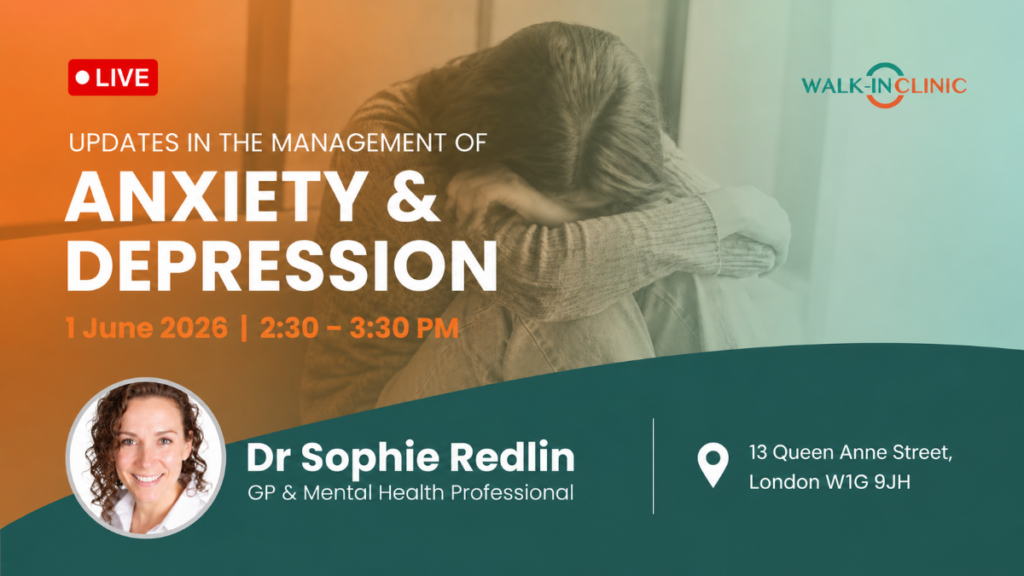
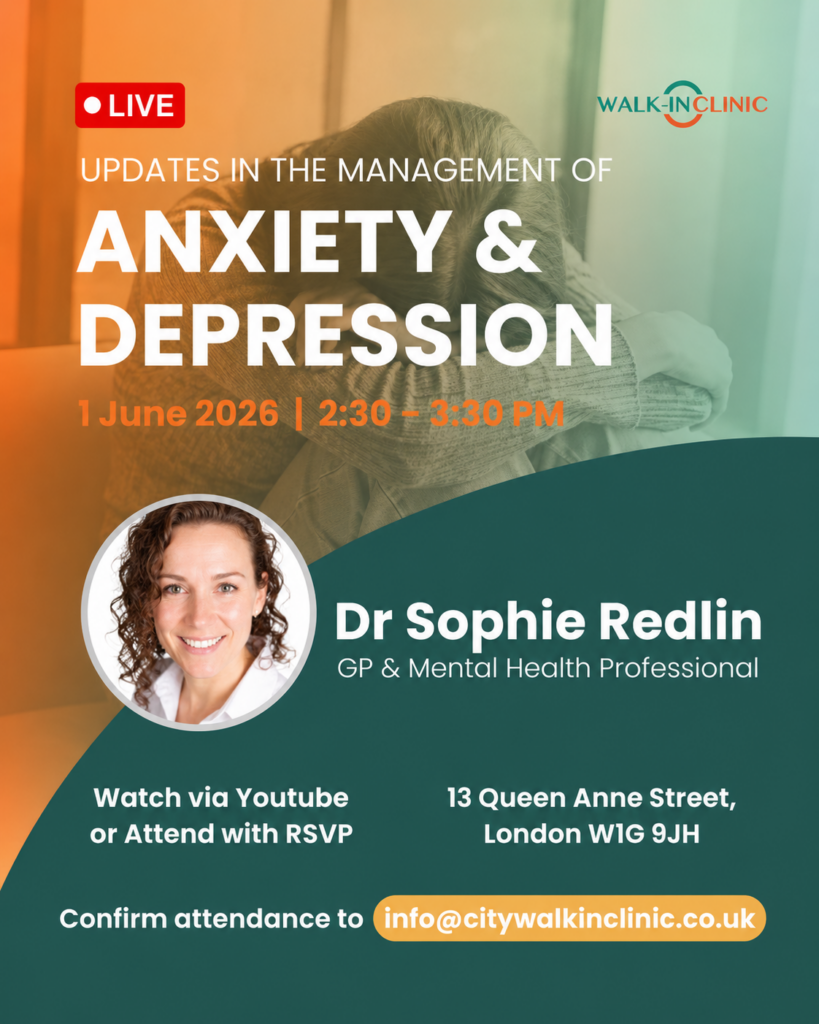
City Walk In Clinic is pleased to host an educational GP event, “Update in the Management of Anxiety & Depression” with Dr Sophie Redlin. This practical session has been designed for busy clinicians working in primary care who want a clear, evidence-based update on the assessment and management of two of the most common mental health presentations in general practice.
The session will focus on real-world clinical decision-making. Rather than approaching anxiety and depression as abstract diagnostic categories, the event will explore how these conditions present in everyday consultations, where symptoms may overlap with physical health concerns, lifestyle pressures, medication issues, substance use, neurodiversity, hormonal changes, chronic illness or significant life events.
Dr Sophie Redlin brings a particularly relevant blend of clinical and mental health experience to this session. She is a London-based GP, mental health researcher and trainer, with additional work spanning medical anthropology, expedition medicine and mental health education for remote and frontline settings. Her wider professional interests include the role of culture, community, environment and storytelling in emotional wellbeing, giving her perspective a valuable depth beyond routine prescribing alone.
This makes her especially well placed to lead a practical discussion on anxiety and depression in primary care, where effective management often depends not only on diagnosis and treatment choice, but on understanding the person, their circumstances and the wider pressures shaping their mental health.
For many patients, primary care is the first place where psychological distress is disclosed. It is also where ongoing support is often coordinated. This makes the GP’s role especially important: recognising when symptoms are mild and manageable, when structured psychological support is needed, when medication may be appropriate, and when risk or complexity requires escalation.
The update will cover current approaches to recognising and assessing anxiety and depression in primary care, including how to evaluate severity, functional impact and risk. It will also look at common clinical pitfalls, including presentations that may be missed, under-treated or over-medicalised.
Prescribing will form an important part of the discussion. Dr Redlin will review updated prescribing strategies, including how to approach first-line medication choices, what to consider when starting or changing treatment, and how to manage expectations around response, side effects and treatment duration. The session will also consider treatment resistance, a common and often frustrating challenge in general practice, where patients may not respond as expected or may struggle to tolerate standard approaches.
Psychological treatment pathways will also be explored, including how to discuss talking therapies with patients, when psychological support may be preferable or complementary to medication, and how to guide patients through available options. The aim is to support clinicians in making balanced, patient-centred decisions that reflect both clinical guidance and the realities of modern primary care.
Risk assessment will be addressed in a practical and clinically relevant way. Anxiety and depression can range from mild symptoms to severe distress, self-neglect or suicidal ideation. The session will consider how to ask about risk sensitively, how to document concerns appropriately, and how to decide when referral or urgent specialist input is needed.
A key focus of the event will be holistic patient support. Mental health management in primary care is not limited to prescriptions or referrals. It often includes sleep, work, relationships, physical health, alcohol use, exercise, social isolation, stress patterns and follow-up planning. The session will look at how clinicians can support patients in a way that is realistic, compassionate and manageable within the pressures of general practice.
There will also be time for questions, discussion and shared clinical experiences with colleagues. This interactive element is intended to make the session especially useful for clinicians who want to compare approaches, raise practical challenges and reflect on cases commonly encountered in day-to-day practice.
The event is suitable for GPs, GP trainees and other healthcare professionals working in primary care. Refreshments will be provided.
Attendance can be confirmed by emailing [email protected].